
 Home
Home Shop Now
 Store List

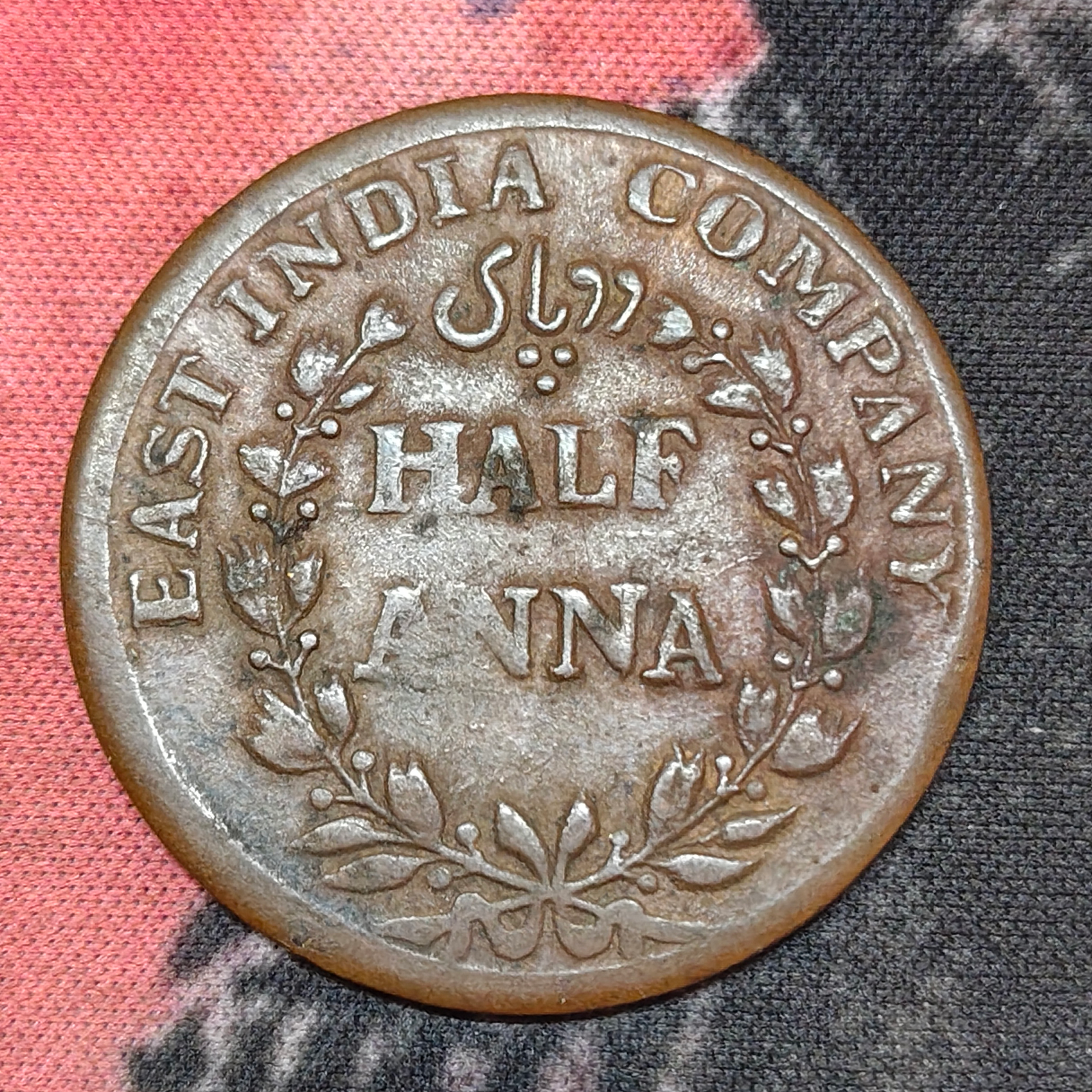
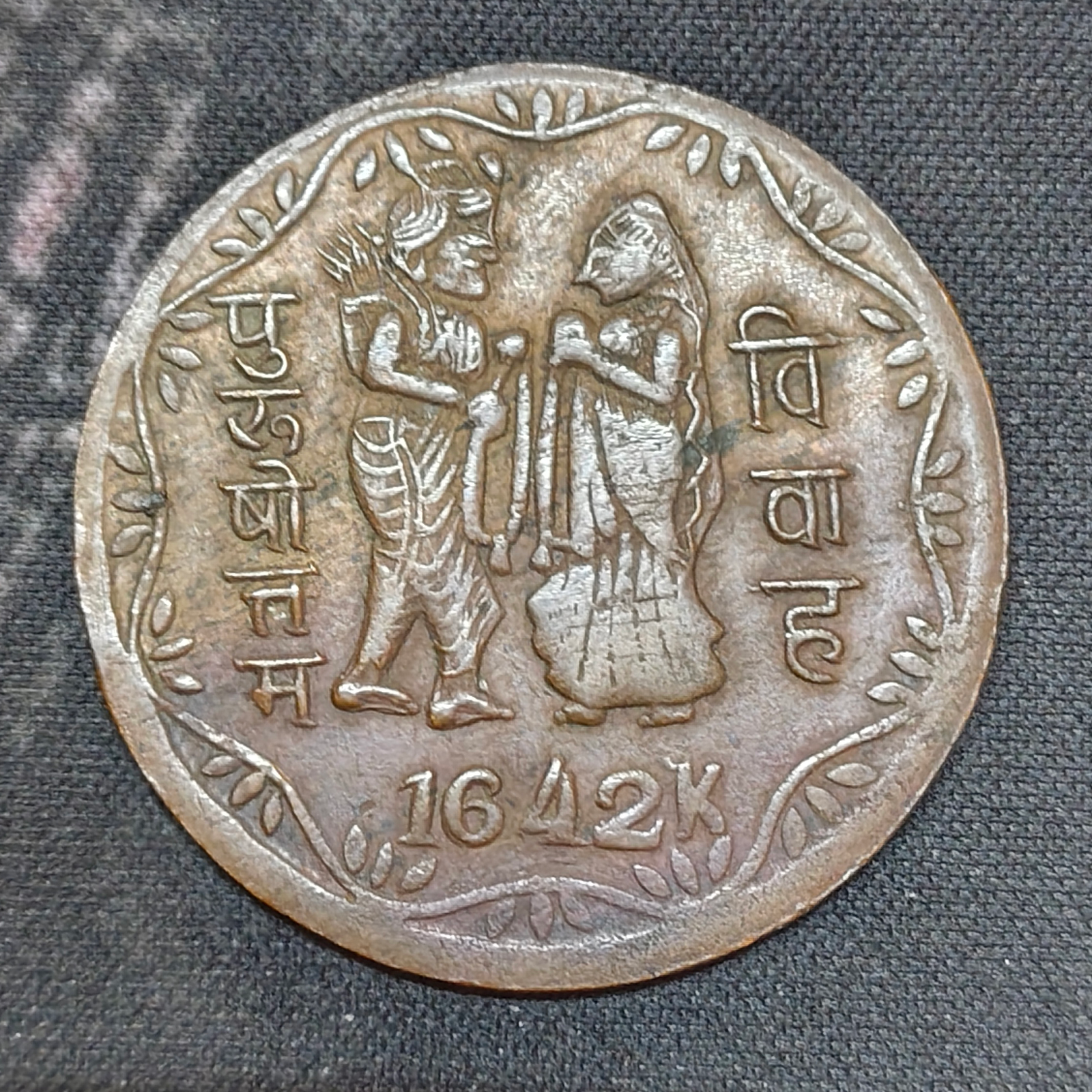
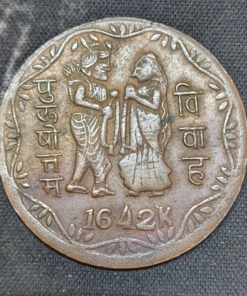
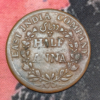
Half Anna Coin from 1642K
Original price was: ₹2,623.95.₹1,573.95Current price is: ₹1,573.95. only.
Indian temple token (often called a Ramatanka) that blends British colonial motifs with Hindu religious iconography.
-
Front: Mimics official colonial currency, bearing the text “East India Company,” the denomination “Half Anna,” and Persian script enclosed in a laurel wreath.
-
Back: Depicts the divine marriage of Lord Rama and Goddess Sita. It features the Devanagari inscriptions “पुरुषोत्तम” (Purushottam/Supreme Being) and “विवाह” (Vivah/Marriage), along with the fantasy date “1642K.”
-
History & Use: This is not official legal tender. It is a cultural and religious artifact mass-produced by private artisans in the 19th and 20th centuries. These tokens were traditionally purchased by pilgrims for temple offerings, kept in home shrines for good fortune, or gifted to newlyweds as an auspicious blessing.
1 in stock
The Illusion of the East India Company
During the 19th and 20th centuries, the British East India Company (and later the British Crown) was recognized across the Indian subcontinent as a symbol of immense wealth, authority, and official power.
Local metalworkers and private mints began creating religious tokens to be sold to pilgrims at holy sites. To make these tokens seem more authoritative, valuable, and “official,” the makers deliberately stamped them with the words “East India Company” and familiar denominations like “Half Anna.” The British East India Company never authorized, designed, or minted these tokens. It was essentially an early form of brand borrowing to give the tokens a sense of prestige.
The Mystery of the “1642K” Date
The date “1642” is a fantasy date. While the East India Company did exist in 1642 (having been chartered in 1600), they were not minting uniform copper coinage with English and Persian scripts alongside Hindu deities during that era. The makers of these tokens chose dates like 1616, 1642, or 1818 arbitrarily to make the pieces feel ancient and historically weighty to the buyers. The “K” is a manufacturer’s mark or a fantasy mint mark added for visual authenticity.
The Cultural Purpose: The “Purushottam Vivah”
While it wasn’t used to buy goods in a market, this token had immense value in a cultural and religious sense.
The imagery depicts the Purushottam Vivah—the divine marriage of Lord Rama (the “Supreme Being” or Purushottam) and Goddess Sita. These specific tokens were deeply intertwined with Indian spiritual life:
-
Temple Offerings: Pilgrims traveling to sacred cities (like Ayodhya or Varanasi) would buy these from bazaar stalls and offer them at temples as a sign of devotion.
-
Wedding Blessings: Because the token depicts a divine marriage, they were frequently gifted to newlyweds as talismans to bless their union with harmony and prosperity.
-
Pooja Keepsakes: Families would keep them in their home shrines (mandirs) to be used during Diwali or other religious ceremonies, believing they brought good fortune and the blessings of Rama and Sita.
Be the first to review “Half Anna Coin from 1642K”
Shipping Policy
Refund Policy
Cancellation / Return / Exchange Policy
General Inquiries
There are no inquiries yet.
Related products



Reviews
There are no reviews yet.