
 Home
Home Shop Now
 Store List
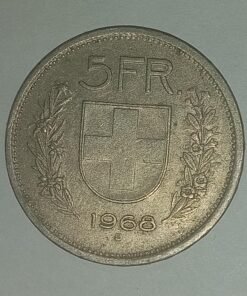
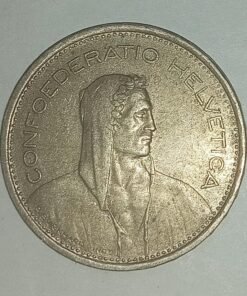
Rare 1968 Swiss 5 Francs coin – Just 999/- + Shipping Extra – Hurry up
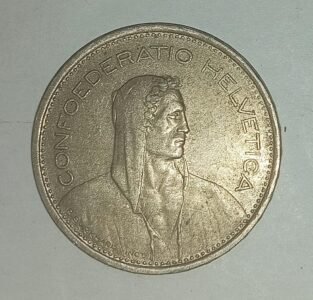
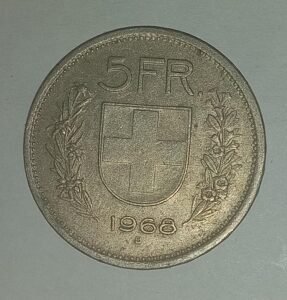
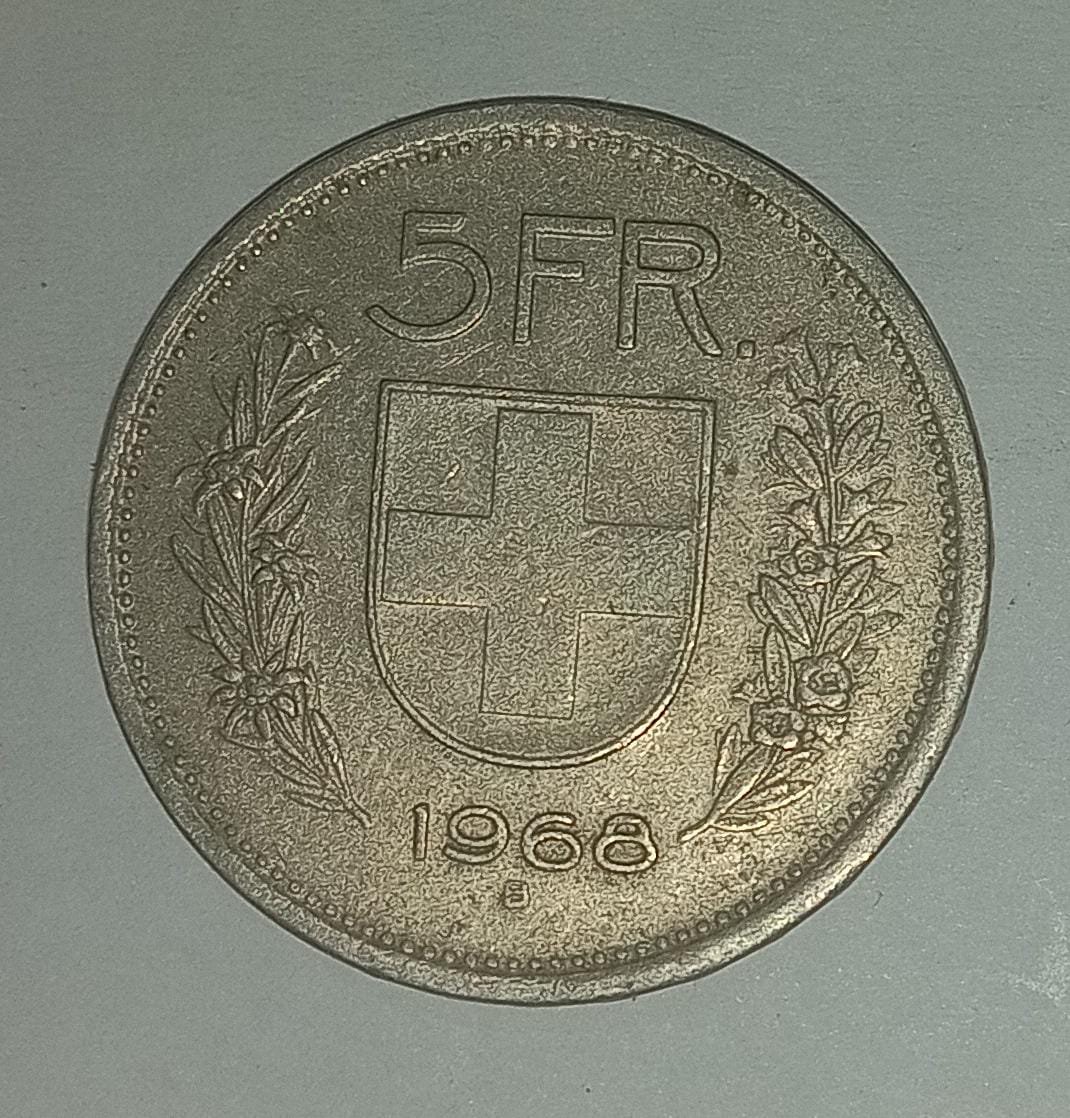
Your coin is a Swiss 5 Francs coin dated 1968, minted in Bern, Switzerland. The “B” below the year is the mint mark for the Bern Federal Mint.

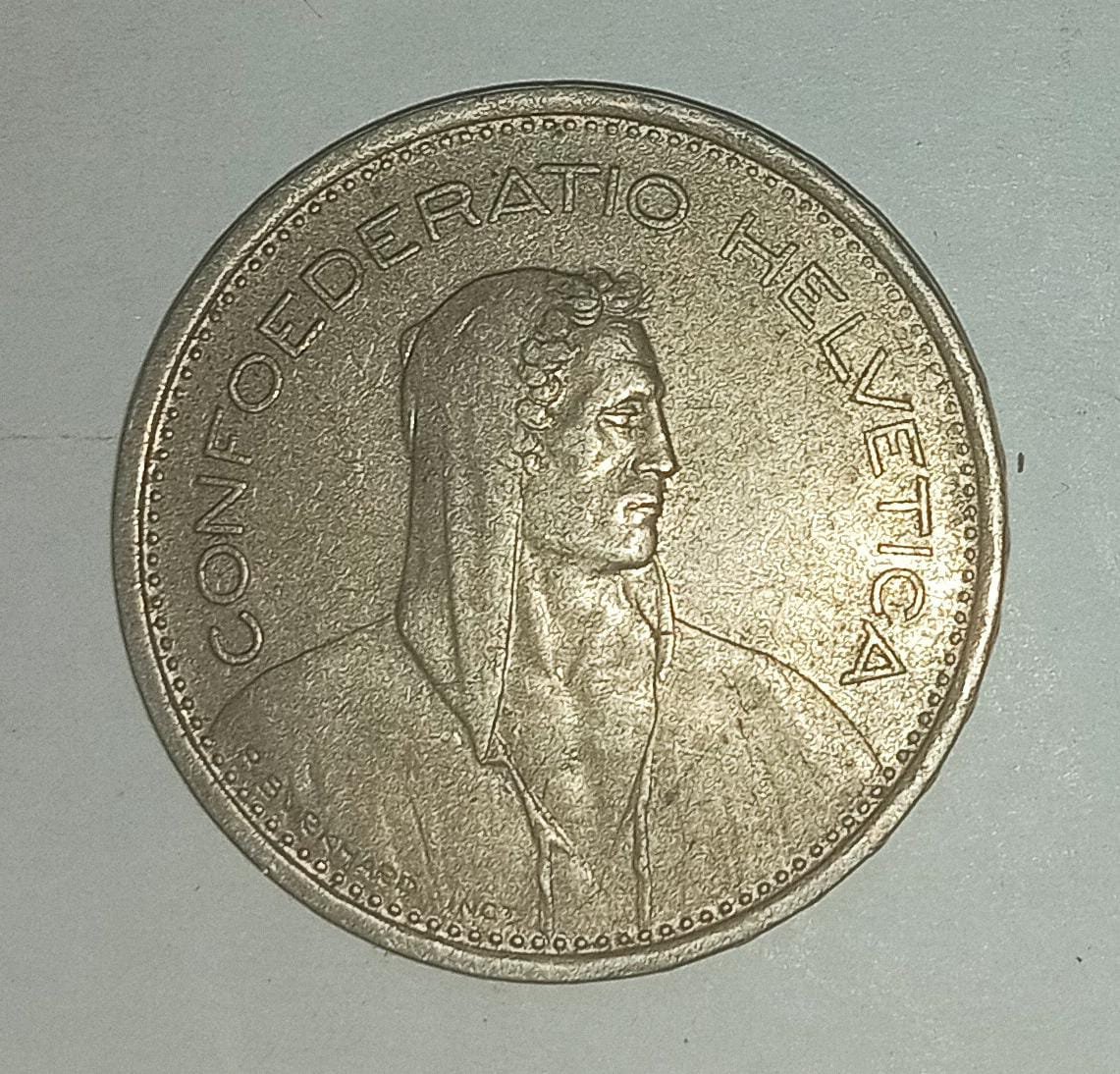
Swissmint specifically confirms that the figure is an Alpine herdsman. The design was created by Swiss artist Paul Burkhard.
Around him you can read:
“CONFŒDERATIO HELVETICA”
This is Latin for “Swiss Confederation.”
only coin avaliable
“P. BURKHARD” identifies the designer/engraver Paul Burkhard.
🛡️ The other side
The reverse shows the Swiss coat of arms—the white Swiss cross on a red shield—surrounded by Alpine flowers.
The flowers represent Switzerland’s Alpine landscape, including edelweiss and alpine rose.
The inscription:
5 FR. = 5 Francs
1968 = year of issue
B = Bern Mint
⭐ The interesting part: 1968 was a major transition year
This makes your coin historically interesting.
Before 1968, Swiss 5-franc coins were made from silver. Rising silver prices created a problem: the metal inside some Swiss coins became worth more than their face value, encouraging people to melt the coins for their silver.
Switzerland therefore began replacing its silver circulation coins with cupronickel in 1968. Swissmint confirms that the 5-franc coin changed to cupronickel at this time, although 1969 also saw a final silver 5-franc issue.
This is Latin and means:
“The Lord Will Provide.”
There are also 13 stars on the edge. Interestingly, Swissmint says the 13 stars were simply used as fillers and do not have a confirmed special symbolic meaning.
📜 Why this design is older than 1968
The Alpine-herdsman design wasn’t created specifically for 1968.
It was introduced on Swiss 5-franc coins in the 1920s. Switzerland redesigned the 5-franc coin after World War I because substantial quantities of Swiss silver coins had disappeared into bullion markets. Paul Burkhard’s Alpine-herdsman design was selected after a design competition.
The coin was later reduced in size and silver content in 1931, and then the major move from silver to copper-nickel occurred in 1968.
Be the first to review “Rare 1968 Swiss 5 Francs coin – Just 999/- + Shipping Extra – Hurry up”
General Inquiries
There are no inquiries yet.
Related products




Reviews
There are no reviews yet.